CBayless Associates home,outdoors The Fusion of Elegance and Endurance: Wood Flooring in London’s Commercial Venues

The Fusion of Elegance and Endurance: Wood Flooring in London’s Commercial Venues

Bringing Professionalism to Commercial Spaces with Wood Flooring

In the dynamic commercial scene of London, the interior Design of a workspace or retail area is crucial in shaping client and customer impressions. Opting for wood flooring in such spaces adds a touch of sophistication and charm, creating an inviting and upscale environment. Whether it’s a trendy café or a high-end boutique, the natural allure of wood flooring elevates London’s business’ brand identity.

Durability for Daily Demands

The constant bustle in Commercial settings calls for flooring that merges aesthetic elegance with enduring strength. When cared for properly, wood flooring stands up to the challenge. Its inherent durability withstands the constant foot traffic, maintaining its quality over time. Selecting the appropriate type of wood and finish is critical to meet the unique requirements of each commercial space.

Maintenance: Ensuring Longevity

To preserve wood flooring’s beauty in commercial settings requires regular maintenance. Daily cleaning with a soft broom or dust mop prevents dirt accumulation, which can cause surface scratches. Entrance mats are a vital first step in keeping out abrasive materials.

Periodically using commercial-grade wood floor cleaners is recommended for deeper cleaning. Professional cleaning ensures thorough care, protecting the floor’s appearance and lifespan. In high-traffic areas, rugs or runners can help distribute wear evenly, prolonging the flooring’s life.

Revitalising with Sanding and Refinishing

Maintaining commercial wood floors’ prime condition involves occasional sanding and refinishing. Sanding removes blemishes and signs of wear, while refinishing renews the protective coating. The frequency of refinishing depends on foot traffic volume. Addressing minor damage promptly can avert the need for more extensive, costly repairs.

Final Thoughts

Wood flooring is a perfect blend of luxury and practicality. In residential areas, it brings a warm, organic feel, aligning with various interior design styles. In commercial environments, it stands as a testament to tasteful aesthetics, adept at handling the demands of a busy setting. With committed maintenance and regular restoration, wood flooring promises to impart its timeless elegance and resilience to spaces for many years.

For further details and insights, please visit our website: floor sand london
Related Post

Unpacking the Home Transformation: The Ultimate Guide for Homeowners from Design to CompletionUnpacking the Home Transformation: The Ultimate Guide for Homeowners from Design to Completion

Beginning a redesigning task is an exciting endeavor that assures to change your home into the dream home you’ve always visualized. However, browsing the renovating procedure can feel like venturing into uncharted territory for many homeowners. Understanding this roadmap, as pointed out by Home Remodeling Expert, from preliminary consultations to the jubilant moment of the final walkthrough is necessary for a smooth and successful remodelling.

The Plan Phase: Style Consultations and Planning

The initial step in your improvement journey starts with style assessments. During these preliminary meetings, it’s crucial to interact your vision, spending plan, and expectations plainly with your renovation contractor. This stage includes exploring style possibilities, choosing products, and preparing a job plan that lines up with your goals and budget. Preparing yourself for versatility in choices and budget plan modifications is smart, as practical restrictions frequently shape the final plan.

The Preparation Stage: Permits and Pre-Construction

As soon as the style is settled, the next step is obtaining the necessary authorizations. This administrative stage ensures your job adheres to local Building codes and regulations, a process that can vary in duration depending on your area and project scope. Following permit approval, you’ll consult with your contractor for a pre-construction conference to evaluate the job timeline, finalize information, and set expectations for the coming weeks. This is likewise the time to prepare your home and family for the upcoming disruptions, such as setting up temporary home or storage solutions for furnishings.

The Building And Construction Phase: Demolition to Restoring

The heart of the remodeling procedure begins with demolition, making way for brand-new structures and styles. This stage can be the most disruptive, with sound, dust, and employees ending up being a short-term part of your every day life. Efficient interaction with your professional, such as

https://maps.app.goo.gl/awJZy6D49Gpaz2zt7

, throughout this time is vital, guaranteeing that the task stays on track and any modifications are made quickly. Regular updates and conferences will help you remain notified of development and any unanticipated challenges that might arise.

The Final Touches: Completing and Walkthrough

As building unwind, the focus shifts to ending up touches such as painting, setting up fixtures, and completing detailed woodworking work. This phase rejuvenates the project, as your vision lastly comes to life. The final walkthrough with your contractor is an important step, permitting you to evaluate the work, address any concerns, and make sure whatever is finished to your complete satisfaction.

Accepting the New Chapter: Post-Remodeling

With the task completed, it’s time to kick back into your freshly remodeled home. While adapting to the new area, it’s likewise crucial to handle any post-construction jobs such as guarantee activations and maintenance ideas supplied by your specialist. Keep in mind, completion of building marks the start of enjoying your dream area, assessing the journey, and planning for any future renovation experiences.

With the right preparation and a trusted professional on your side, you can browse the journey from blueprint to conclusion with confidence, changing your home into the sanctuary you’ve always desired.

6 Good Reasons Why You May Need To Turn To Solar power6 Good Reasons Why You May Need To Turn To Solar power

Economize And Generate Income

As opposed to well-known opinion, making the swap to solar energy may not have to break the bank and can also put hard earned money back into your pocket!Whenever you make the shift to solar power energy, you primarily use the electricity which you create and, when you do use electricity from the grid, you can aim to do so when the electric is at its cheapest. Solar Info Here -

Reduce Your Influence on The Environment

The electrical energy that your solar power panels create is one hundred% clean and sustainable and calls for no burning (on our world anyway!) which means there are no discharges of dangerous greenhouse gases generated. On the other hand, the electric power from power stations may be generated from burning fossil fuel.

Self-reliance from the Grid

Power prices have never been higher, and as customers we’re never quite sure when the next price hike is going to be put into effect, sending our private spending plans and financial plans into disarray.When you switch over to solar, you cut off yourself from the subconscious worry of unplanned rate hikes.

National Benefits and Assistance

Because of the campaigns of the Government to decrease the extent of climate change, and the different sustainability targets that they need to attain, there are now significant incentives to switch to solar power at home. More -

House Value Increase

When solar energy panels primarily started being put in on domestic roof tops, a lot of house owners were concerned about cheapening their property – after all, a solar array isn’t the prettiest thing to have ever graced the top of a Building.

These days however, as a result of ever growing energy expenses, as well as an increased understanding of environmental obligation and protecting our earth, this perception has improved, with the addition of solar photovoltaic cells on a rooftop adding to the value of a residential or Commercial property.

Modest Upkeep Innovation

Solar power panels in reality only call for a quick inspection every year to guarantee they’re working optimally. It’s also good to make sure the solar panels are kept clean and aren’t eclipsed by trees – do this, and your solar panels really should last well over 20 years.

As you’ll now know, it is now easier than ever before to switch over to solar power. Click on this link now -

Land Loans: Everything You Need To KnowLand Loans: Everything You Need To Know

What is a Land Loan? 

A land loan, also known as a plot or lot loan, is a financial option allowing individuals to purchase a piece of land using credit. This type of loan is suitable for those who intend to acquire land without immediate Construction plans. It’s important to note that land Loans differ from home loans or construction loans. It can be used for both residential and business purposes.

Types of Land Loans 

Land loans can be categorized based on the level of land development. Each type of land loan necessitates distinct preparations to convince lenders to provide financing. Let’s explore the different types:

  • LOAN FOR UNDEVELOPED LAND (RAW LAND LOAN) 
    • Undeveloped land refers to properties without road access, water supply, electricity, or sewer lines, rendering the land unsuitable for immediate construction. While raw land is the most economical option for purchase, it also requires higher down payments and interest rates to secure a loan. The Federal Deposit insurance Corp. (FDIC) sets a minimum down payment of 35% for undeveloped land. Additionally, to obtain a raw land loan, you’ll need a well-structured and detailed plan for the land’s development to convince lenders that it represents a calculated risk.
  • LOAN FOR SEMI-DEVELOPED LAND (UNIMPROVED LAND LOAN) 
    • Semi-developed or unimproved land typically possesses some basic infrastructure, although it may need more amenities such as phone boxes, natural gas, or electric meters. Financing a loan for unimproved land is less risky than undeveloped land but still requires a rigorous process. The FDIC’s minimum down payment standard for unimproved land is 25%.
  • LOAN FOR DEVELOPED LAND (IMPROVED LAND LOAN) 
    • Developed lands, often called lots, come with access roads and all the necessary utilities for residential construction. Although improved lots are more expensive, they tend to have comparatively lower land loan interest rates. Lenders are also more inclined to finance this type of loan, with the FDIC setting the minimum down payment for improved land loans at 15%.

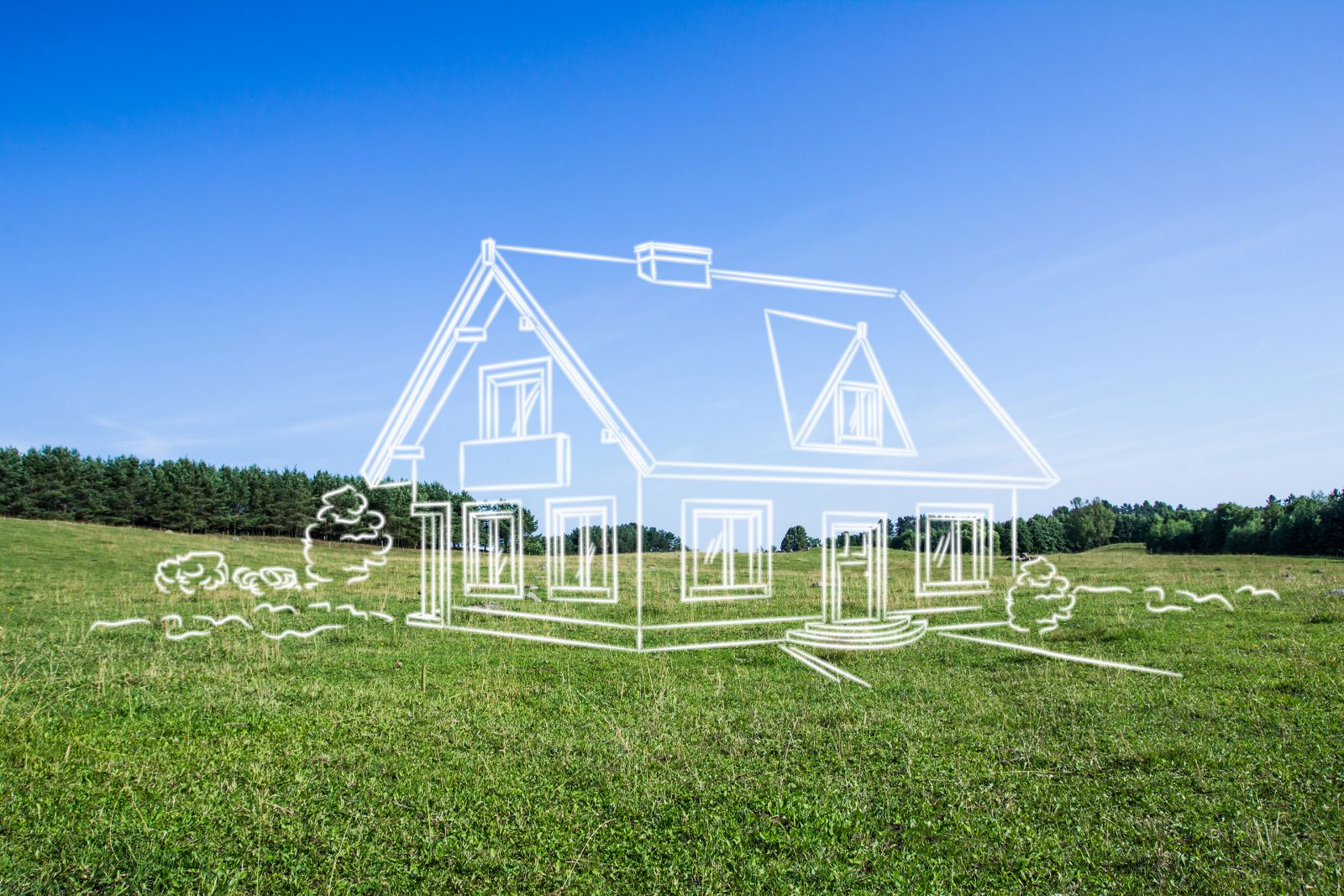
image of draft of a house on raw land purchased with a raw land loan

Advantages of Taking a Land Loan 

Land loans offer several advantages for individuals who need more time to build on their purchased land. These advantages include:

  1. Flexibility: Land loans provide the flexibility to secure land for its potential, such as in areas with upcoming business opportunities or future development. You can hold the land until the timing is right for your construction project.
  2. “Blank Canvas”: Acquiring land before any construction allows you to start with a “blank canvas.” You can envision and create your dream home or commercial space according to your preferences and needs.
  3. Transition to Construction Loan: When you’re ready to build, your land loan can be seamlessly integrated with a construction loan to finance the land purchase and construction costs. Ultimately, this can transform your land loan into a standard mortgage when you’re ready to move in.

Disadvantages of Taking a Land Loan 

Despite the advantages, land loans come with certain disadvantages, mainly due to the higher risks involved:

  1. Limited Lender Options: Lenders for land loans can be limited in number due to the inherent risks, which may limit your choices when selecting a lender.
  2. Stricter Qualifications: To secure a land loan, you must meet more stringent qualifications than a standard mortgage.
  3. Higher Down Payments and Interest Rates: Land loans have higher down payment and interest rates than traditional mortgages. These additional costs are a result of the higher risks faced by lenders.

To mitigate these disadvantages, having a well-defined construction plan, including a set timeline and cost estimates, can increase your loan approval chances, is essential.

Land Loan vs. Other Land-Buying Options 

If you encounter difficulties meeting land loan qualifications, alternative methods exist to finance your land purchase. Some options cater to home-Building purposes, while others are designed for commercial space.

  • SELLER-FINANCING 
    • Seller financing is where the seller acts as your lender in a land contract. This arrangement can be more flexible and suitable for those who may not meet traditional bank loan requirements. It’s essential, however, to engage an attorney to review the land contract to ensure clarity and prevent potential gray areas or loopholes.
  • HOME EQUITY LOAN 
    • Another method for purchasing land is through a home equity loan, where you receive a lower interest rate against your home’s equity. It’s important to note that defaulting on this type of loan could lead to the risk of losing your home.
  • HOME EQUITY LINES OF CREDIT
    • Home Equity Lines of Credit (HELOCs) provide a flexible way to access funds over a specified timeframe using your home’s equity. You can use a HELOC as a down payment for a land loan and repay the HELOC amount and interest.
  • USDA LOAN 
    • The USDA offers a land and construction loan designed for low to moderate-income families planning to build a home in a qualified rural area. This option can particularly benefit those seeking a more affordable land and home construction path.
  • SBA LOAN 
    • Small Business Administration (SBA) loans are available to assist small business owners in financing raw land and construction costs for commercial buildings. The SBA 504 loan program provides fixed-rate financing with a 10% down payment, 40% loan financing through the Certified Development Loan, and 50% provided by a bank or credit union.
  • PERSONAL LOAN 
    • A personal loan can also finance your land purchase. While this approach can offer flexibility, it can have higher interest rates. You may also need to compare its shorter repayment periods with the rest.

Looking for a Land Loan? 

Securing a land loan can be more challenging than obtaining a standard mortgage. However, you can increase your chances of approval with proper preparation. A credit union consultant specializing in land financing can provide significant assistance in navigating the process and ensuring your specific needs are met when purchasing land. Explore your options and receive expert guidance by scheduling an appointment with us today.

Canopy Credit Union | Everything You Need to Know on Land Loans