CBayless Associates business,outdoors,people Bluewater Yacht Insurance: Navigating Coverage for Your Luxury Vessel

Bluewater Yacht Insurance: Navigating Coverage for Your Luxury Vessel

Owning a luxury yacht is a dream for many, and when you’ve invested in a vessel designed for the high seas, protecting that Investment becomes paramount. This is where bluewater yacht insurance comes into play, offering specialized coverage tailored to the unique risks and requirements of luxury yachts.

Understanding Bluewater Yacht insurance

Bluewater yacht insurance is a comprehensive form of coverage designed specifically for high-value and luxury yachts. It goes beyond standard boat insurance to address the distinctive needs of yacht owners who venture into deep waters, often far from shore.

Key Coverage Areas

Hull Insurance: Similar to standard boat insurance, bluewater yacht insurance covers damage to the yacht’s hull, machinery, and equipment. This includes protection against risks like collisions, sinking, and damage from storms or other natural disasters.

Liability Insurance: Liability coverage is essential for yacht owners, as accidents or damage caused by your yacht could result in costly legal claims. Bluewater yacht insurance typically includes substantial liability coverage to protect your assets in case of such incidents.

Salvage and Wreck Removal: If your yacht becomes stranded or involved in an accident, salvage and wreck removal can be extremely expensive. Bluewater yacht insurance often includes coverage for these costly operations.

Personal Property: Luxury yachts often have valuable personal property on board, such as high-end furnishings, electronics, and water toys. Bluewater policies can extend coverage to protect these assets.

Crew Coverage: For yachts with a crew, insurance can also cover injuries or illnesses that crew members may sustain while on duty.

Factors Affecting Premiums

Several factors influence the cost of bluewater yacht insurance premiums:

Yacht Value: The insured value of the yacht is a significant factor in determining premiums. Luxury yachts come in various sizes and values, and the more valuable the yacht, the higher the premium.

Navigational Area: The waters in which the yacht operates impact the risk profile and, consequently, the cost of insurance. Cruising in remote or high-risk areas may result in higher premiums.

safety Measures: Yachts equipped with advanced safety features, alarms, and tracking systems may qualify for lower premiums.

Claims History: The yacht’s claims history and the owner’s record can influence insurance rates.

Deductible: Like other insurance types, the choice of deductible—the amount the insured must pay before coverage applies—can affect premiums.

Navigating Your Options

Choosing the right bluewater yacht insurance policy requires a thorough assessment of your yacht’s specific needs and risks. Working with a knowledgeable yacht insurance broker who understands the luxury yacht market can help you find the ideal coverage to protect your investment.

Conclusion

Owning a luxury yacht is a significant achievement, and safeguarding it with bluewater yacht insurance is essential. With the right coverage in place, you can enjoy your yachting adventures with peace of mind, knowing that your prized possession is protected against the unique risks of the open sea.

For a comprehensive exploration of this subject, please refer to: Velos Insurance
Related Post

Why I’d Rather Buy Gold Monthly with Dollar-Cost Averaging than IndividuallyWhy I’d Rather Buy Gold Monthly with Dollar-Cost Averaging than Individually

The Benefits of Buying Gold Monthly Instead of Individually

One advantage of Benefits of Buying Gold Monthly instead of individually is the ability to take advantage of dollar-cost averaging. With this approach, buyers can spread out their purchases over time, reducing the impact of market fluctuations on their overall investment. By consistently buying a fixed amount of gold each month, regardless of its price, buyers can potentially lower their average cost per ounce over time.

Another benefit is the ease and convenience that comes with setting up a monthly gold subscription. Instead of constantly monitoring market conditions and making individual purchasing decisions, I can simply set up automatic monthly payments and let my holdings grow steadily over time. This eliminates the need for constant decision-making and reduces the emotional stress often associated with timing the market.

Furthermore, Buy Gold and Pay Monthly allows you to build a diversified portfolio more easily. By regularly adding to you holdings each month, you can gradually increase your exposure to this precious metal while spreading out any potential risks associated with trading your cash for a single asset class. This strategy helps mitigate volatility in one’s portfolio and provides an opportunity for long-term growth through consistent accumulation of gold assets.

How Dollar-Cost Averaging Makes Gold Buying More Accessible

Dollar-cost averaging is a strategy that can make buying gold more accessible for investors. Instead of making large lump sum purchases, this approach allows individuals to buy gold in smaller increments on a regular basis. By spreading out the investment over time, it reduces the impact of short-term price fluctuations and minimizes the risk associated with timing the market.

One of the main benefits of dollar-cost averaging when buying gold monthly is that it provides an opportunity to take advantage of price fluctuations. Gold prices can be volatile, but by consistently purchasing a fixed amount each month, investors are able to average out their cost per ounce over time. This means that they will acquire more ounces when prices are low and fewer ounces when prices are high. In doing so, they can potentially increase their overall return on investment.

Another advantage of buying gold monthly through dollar-cost averaging is its simplicity and convenience. Setting up a monthly subscription takes just a few minutes and can usually be done online or through a broker. Once set up, investors don’t need to worry about constantly monitoring market conditions or trying to time their purchases perfectly. They can simply sit back and let their automatic investments accumulate over time.

By utilizing dollar-cost averaging when buying gold monthly, investors have an opportunity to build wealth gradually while mitigating some of the risks associated with market volatility. This approach allows them to establish discipline in their investment Habits and avoid making impulsive decisions based on short-term market trends or emotions. Over time, consistent monthly investments in gold have the potential for long-term growth and provide peace of mind knowing that they are steadily Building their portfolio regardless of temporary price fluctuations.

How does dollar-cost averaging make gold buying more accessible?

Dollar-cost averaging involves buying a fixed amount of gold at regular intervals, regardless of its price. This strategy spreads out your purchases over time, making it more affordable and reducing the impact of market volatility. The most accessible entry to this strategy is gold and silver subscription.

Miljövänlig schakttransport – minska projektets klimatavtryckMiljövänlig schakttransport – minska projektets klimatavtryck

Schaktning och transport av massor innebär ofta tunga transporter och stora mängder material.
Det kan ge betydande utsläpp av koldioxid och påverka lokala ekosystem. För att minska
miljöpåverkan krävs att transportörerna arbetar med hållbara rutiner och modern utrustning.
En aktör med stor fordonsflotta och fokus på miljömässig drift arbetar ständigt för att göra
transporterna mer miljövänliga. Detta kan innefatta optimerad ruttplanering, utbildning av förare i eco‑driving och användning av biodrivmedel eller eldrivna lastbilar när det är möjligt.

Fullservice med fokus på avsättning

Avsättning av massor kan vara en miljömässig utmaning om den hanteras felaktigt. När
transportören erbjuder en heltäckande tjänst som både transporterar och tar hand om schaktmassor minskar riskerna för otillåtna tippningar eller långa körsträckor.

Massorna kan sorteras och återvinnas, exempelvis som fyllnadsmaterial, vilket bidrar till cirkulär användning av resurser. Genom att noga dokumentera var massorna hamnar skapas transparens gentemot myndigheter och beställare.

Hållbara val av utrustning och tekniker

Det är viktigt att de maskiner och lastbilar som används är väl underhållna och uppfyller
moderna miljökrav. Många företag investerar i nya fordon med lägre utsläpp och bättre
bränsleekonomi. Dessutom kan mindre fordon användas för projekt som inte kräver stora mängder massor, vilket minskar bränsleförbrukningen. Anpassningsbar utrustning och en bred fordonspark möjliggör rätt kombination för varje projekt.

Samarbete mellan beställare och transportör

För att uppnå hållbarhet måste beställare och transportör arbeta tillsammans. Genom att dela information om massor, tidplaner och mottagningsställen kan rutter optimeras och tomkörningar undvikas. Transportören kan också ge råd om alternativa lösningar när markförhållanden förändras. Det kundfokuserade arbetssättet och möjligheten att erbjuda skräddarsydda lösningar gör det lättare att anpassa projekten till hållbarhetskrav.

Slutord

Miljövänlig schakttransport är inte bara en trend utan en nödvändighet i en tid då
byggbranschen måste ta ansvar för sin miljöpåverkan. Genom att välja en partner med
helhetstänkande, modern utrustning och starkt kundfokus minskas projektens klimatavtryck och effektiviteten ökar.

Land Loans: Everything You Need To KnowLand Loans: Everything You Need To Know

What is a Land Loan? 

A land loan, also known as a plot or lot loan, is a financial option allowing individuals to purchase a piece of land using credit. This type of loan is suitable for those who intend to acquire land without immediate Construction plans. It’s important to note that land Loans differ from home loans or construction loans. It can be used for both residential and business purposes.

Types of Land Loans 

Land loans can be categorized based on the level of land development. Each type of land loan necessitates distinct preparations to convince lenders to provide financing. Let’s explore the different types:

  • LOAN FOR UNDEVELOPED LAND (RAW LAND LOAN) 
    • Undeveloped land refers to properties without road access, water supply, electricity, or sewer lines, rendering the land unsuitable for immediate construction. While raw land is the most economical option for purchase, it also requires higher down payments and interest rates to secure a loan. The Federal Deposit insurance Corp. (FDIC) sets a minimum down payment of 35% for undeveloped land. Additionally, to obtain a raw land loan, you’ll need a well-structured and detailed plan for the land’s development to convince lenders that it represents a calculated risk.
  • LOAN FOR SEMI-DEVELOPED LAND (UNIMPROVED LAND LOAN) 
    • Semi-developed or unimproved land typically possesses some basic infrastructure, although it may need more amenities such as phone boxes, natural gas, or electric meters. Financing a loan for unimproved land is less risky than undeveloped land but still requires a rigorous process. The FDIC’s minimum down payment standard for unimproved land is 25%.
  • LOAN FOR DEVELOPED LAND (IMPROVED LAND LOAN) 
    • Developed lands, often called lots, come with access roads and all the necessary utilities for residential construction. Although improved lots are more expensive, they tend to have comparatively lower land loan interest rates. Lenders are also more inclined to finance this type of loan, with the FDIC setting the minimum down payment for improved land loans at 15%.

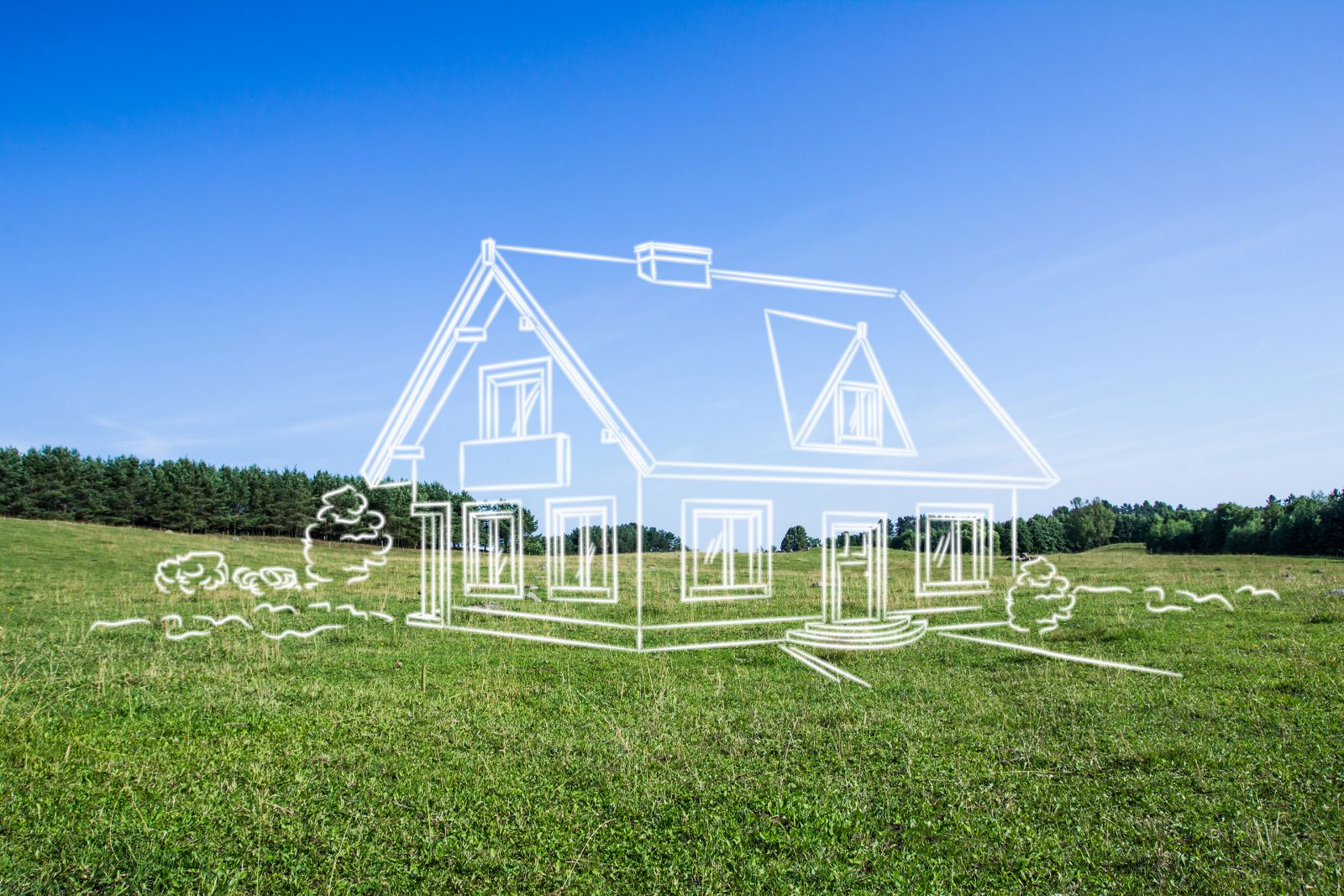
image of draft of a house on raw land purchased with a raw land loan

Advantages of Taking a Land Loan 

Land loans offer several advantages for individuals who need more time to build on their purchased land. These advantages include:

  1. Flexibility: Land loans provide the flexibility to secure land for its potential, such as in areas with upcoming business opportunities or future development. You can hold the land until the timing is right for your construction project.
  2. “Blank Canvas”: Acquiring land before any construction allows you to start with a “blank canvas.” You can envision and create your dream home or commercial space according to your preferences and needs.
  3. Transition to Construction Loan: When you’re ready to build, your land loan can be seamlessly integrated with a construction loan to finance the land purchase and construction costs. Ultimately, this can transform your land loan into a standard mortgage when you’re ready to move in.

Disadvantages of Taking a Land Loan 

Despite the advantages, land loans come with certain disadvantages, mainly due to the higher risks involved:

  1. Limited Lender Options: Lenders for land loans can be limited in number due to the inherent risks, which may limit your choices when selecting a lender.
  2. Stricter Qualifications: To secure a land loan, you must meet more stringent qualifications than a standard mortgage.
  3. Higher Down Payments and Interest Rates: Land loans have higher down payment and interest rates than traditional mortgages. These additional costs are a result of the higher risks faced by lenders.

To mitigate these disadvantages, having a well-defined construction plan, including a set timeline and cost estimates, can increase your loan approval chances, is essential.

Land Loan vs. Other Land-Buying Options 

If you encounter difficulties meeting land loan qualifications, alternative methods exist to finance your land purchase. Some options cater to home-Building purposes, while others are designed for commercial space.

  • SELLER-FINANCING 
    • Seller financing is where the seller acts as your lender in a land contract. This arrangement can be more flexible and suitable for those who may not meet traditional bank loan requirements. It’s essential, however, to engage an attorney to review the land contract to ensure clarity and prevent potential gray areas or loopholes.
  • HOME EQUITY LOAN 
    • Another method for purchasing land is through a home equity loan, where you receive a lower interest rate against your home’s equity. It’s important to note that defaulting on this type of loan could lead to the risk of losing your home.
  • HOME EQUITY LINES OF CREDIT
    • Home Equity Lines of Credit (HELOCs) provide a flexible way to access funds over a specified timeframe using your home’s equity. You can use a HELOC as a down payment for a land loan and repay the HELOC amount and interest.
  • USDA LOAN 
    • The USDA offers a land and construction loan designed for low to moderate-income families planning to build a home in a qualified rural area. This option can particularly benefit those seeking a more affordable land and home construction path.
  • SBA LOAN 
    • Small Business Administration (SBA) loans are available to assist small business owners in financing raw land and construction costs for commercial buildings. The SBA 504 loan program provides fixed-rate financing with a 10% down payment, 40% loan financing through the Certified Development Loan, and 50% provided by a bank or credit union.
  • PERSONAL LOAN 
    • A personal loan can also finance your land purchase. While this approach can offer flexibility, it can have higher interest rates. You may also need to compare its shorter repayment periods with the rest.

Looking for a Land Loan? 

Securing a land loan can be more challenging than obtaining a standard mortgage. However, you can increase your chances of approval with proper preparation. A credit union consultant specializing in land financing can provide significant assistance in navigating the process and ensuring your specific needs are met when purchasing land. Explore your options and receive expert guidance by scheduling an appointment with us today.

Canopy Credit Union | Everything You Need to Know on Land Loans